Type your address.
See every prospect around you.
Your yard at the centre, your radius around it, and the homes you can actually sell to — owned, not flats, roof suitable, no panels yet. Then the package to pitch and the material list to order.
From a postcode to a purchase order in three moves
Nothing to prepare. It all runs from one address field.
Set your radius
Your postcode, a radius from 5 to 80 km, and the share you realistically win.
Read the catchment
Four filters — tenure, dwelling type, roof, existing PV — leave the homes you can sell to, split by segment and ranked by postcode sector.
Order against it
Each segment maps to a package. 49 lines costed automatically, installation included, ordered online.
Built around how install work is actually won
A funnel you can audit
Every step shows its coefficient and its source — English Housing Survey, BRE, MCS. No black box.
Market size and your share, kept apart
The catchment is the whole market. Your pipeline is that times the share you set. We never show one as the other.
Segments that map to packages
Detached, semi and terraced each get the packages their roof can carry. Off-gas and EPC-below-C are flagged as heat pump openings.
Material lists that match the van
Rails, clamps, cable and bird mesh scale with panel count. Every line shows the rule that produced it.
A margin gate that holds
Equipment gross margin below 50% will not save as a quote. Enforced in the pricing engine, not left to the form.
Priority sectors, not just a total
Postcode sectors ranked by addressable homes, so a canvassing round has somewhere to start.
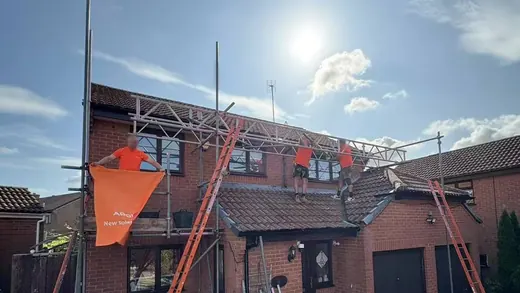
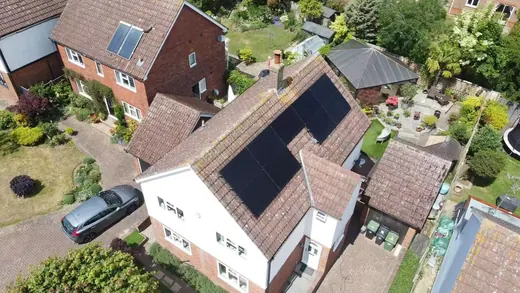
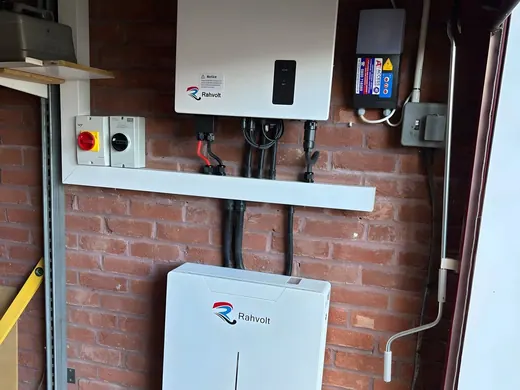
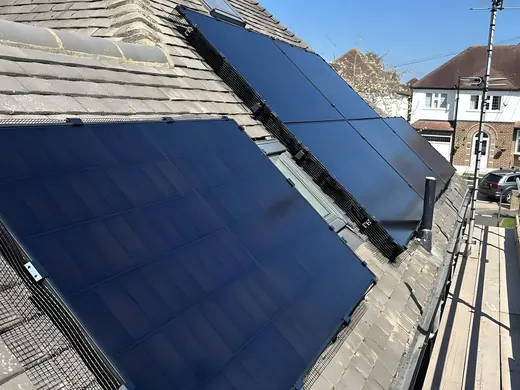
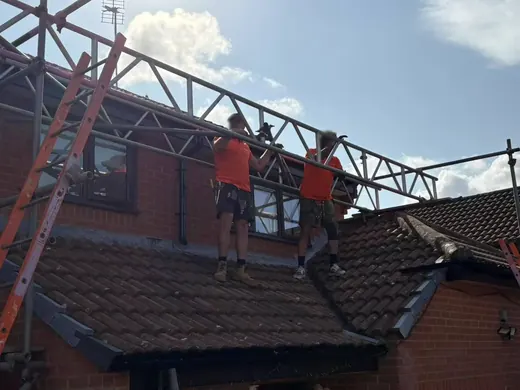
This is the work the numbers are about
Standard packages, all-in pricing

5 kWh storage
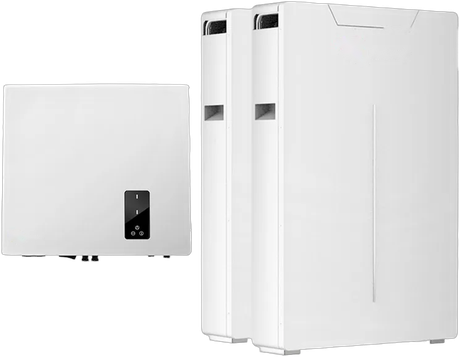
10 kWh storage
10 kWh storage
10 kWh storage
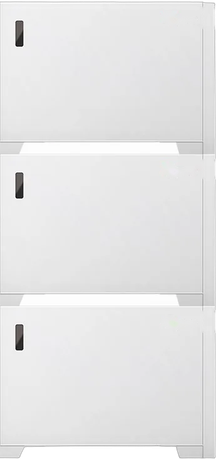
15.36 kWh storage
20.48 kWh storage
25.6 kWh storage
Published totals already include £2,500 for standard installation with one scaffold side. Flat roof, flat-roof survey and flat-roof mounting are excluded. Non-standard configurations are priced live from the material list.
Start free. Pay when it earns you work.
Each tool is bought and billed on its own. Run one of them, or run all three on a single login.
Starter
- 10 catchment reports a month
- 25 quotes a month
- All 7 standard packages
- Online ordering
Pro
- 200 catchment reports a month
- 500 quotes a month
- Live pricing for custom builds
- Order fulfilment tracking
- Material list export
Advanced
- Unlimited reports and quotes
- Postcode-sector measured data
- Connects to proposal and CRM
- Custom SOP and API work
Questions installers actually ask
How is the prospect count worked out? Can I trust it?
Housing stock in the radius is multiplied by owner-occupancy (tenants cannot authorise a roof), then flats are removed (no independent roof title), then roof suitability for orientation, shading and structure, then homes with panels already fitted are subtracted. Every coefficient and its source is printed in the report.
Each figure carries a data tier: measured from open data, modelled from measured values via published coefficients, estimated where regional data is missing. We never dress an estimate up as a measurement — the badge is on screen next to the number.
Is the pipeline figure money I will actually take?
Only the half labelled as yours. The report shows the annual opportunity for the whole catchment and, separately, your share of it based on the market share you set. Presenting the first as the second is the fastest way to plan a business around revenue that belongs to your competitors.
Where does the material list come from?
A real purchasing workbook: 3 main items and 46 ancillaries, 49 lines in total. Inverter and battery costs interpolate between verified cost points. Rails, clamps, cable and bird mesh scale linearly with panel count; the rest take fixed quantities from the nearest reference package. Every line shows the rule that produced it.
What data is loaded today?
Postcode-area centroids for 121 UK areas, which are real coordinates, plus dwelling counts banded by settlement size, which are an estimated tier and only indicate order of magnitude. Loading the ONS Postcode Directory and census sector statistics upgrades the whole system to measured with no code change.
I already use your design or CRM tool
Sign in with the same account — all three share one identity. A roof drawn in easy-proposal flows here to be costed, and the finished material list flows back into your CRM. Running only this one is equally fine: one tool, one server, one bill.
Three tools, one login
Each runs on its own server and can be bought separately. Share an account and your data flows between them: a roof drawn in proposal becomes a material list here, and lands back in your CRM.